
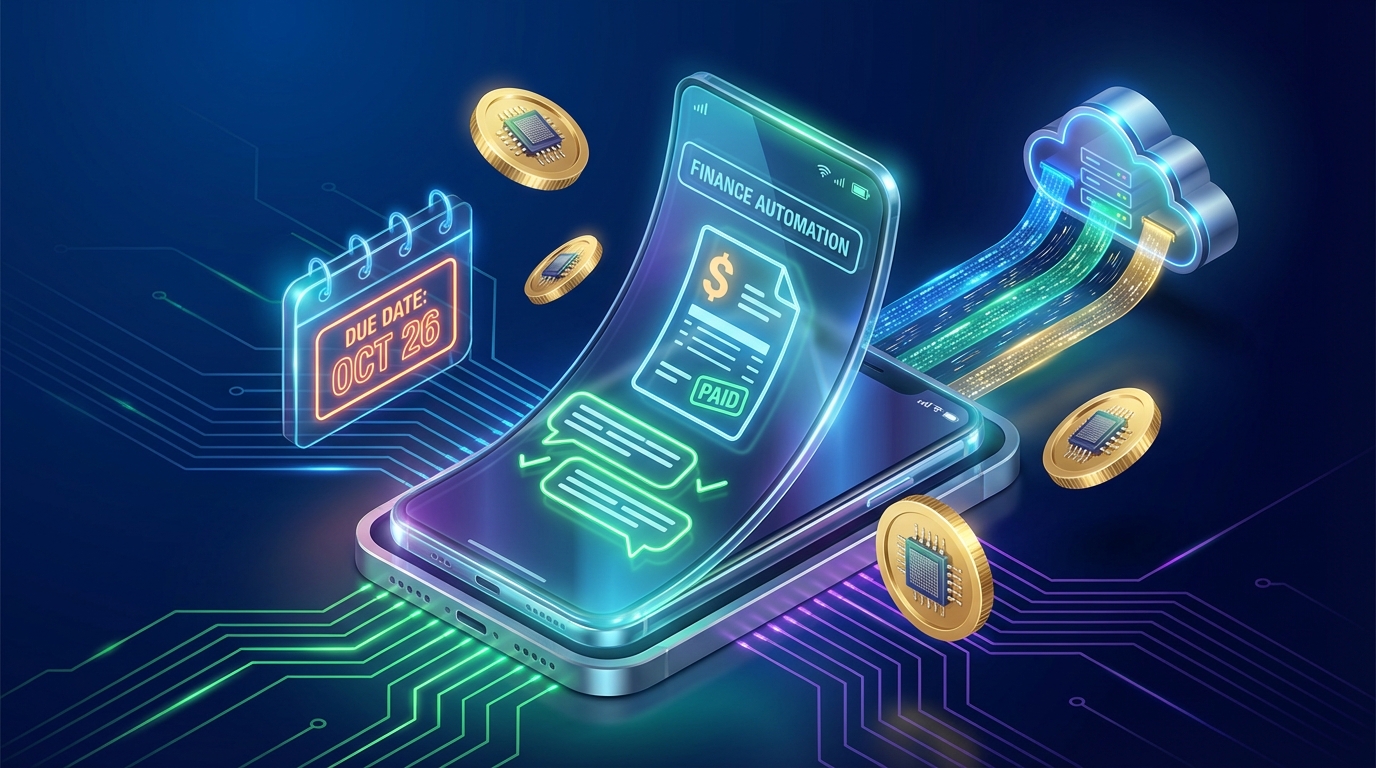
The Silent Cash Flow Killer: Why Traditional Invoicing is Failing
Late payments are the bane of every growing business. Whether you run a SaaS company, an e-commerce store, or a B2B service agency, unpaid invoices silently cripple your cash flow and stunt your growth. For decades, businesses have relied on automated email sequences to chase down these payments. However, in 2025, email deliverability is at an all-time low. Your critical billing alerts are likely being buried in the promotions tab, swallowed by aggressive spam filters, or simply ignored by overwhelmed customers.
Phone calls are equally problematic. They are intrusive, time-consuming, and require a dedicated human collections team, which drastically increases your operational costs. SMS messages offer better visibility but lack the rich media capabilities and conversational nature required for modern customer support. This is exactly where integrating a WhatsApp API for payment reminders becomes a massive competitive advantage. With a staggering open rate of over 98%, WhatsApp ensures your invoices are not just delivered, but actually seen and acted upon within minutes.
In this comprehensive, expert-led guide, we will explore exactly how you can leverage a WhatsApp API to automate your billing communications. By the end of this article, you will know how to design a high-converting collection workflow, integrate it with your existing tech stack, and recover lost revenue on autopilot while maintaining a phenomenal customer experience.
Why You Need a WhatsApp API for Payment Reminders in 2025
Transitioning your billing alerts from email to WhatsApp is not just a technological upgrade; it is a fundamental shift in how you communicate with your customers. The modern consumer practically lives inside messaging apps, and reaching them where they are most comfortable yields incredible results. Here is why deploying a WhatsApp API for payment reminders is the smartest financial decision you can make this year.
1. Unmatched Open and Engagement Rates
The statistics speak for themselves. While the average email open rate hovers around 20%, WhatsApp boasts a 98% open rate, with the vast majority of messages being read within the first three minutes of delivery. When an invoice is due, visibility is your first and most important hurdle. WhatsApp guarantees that your message lands directly in the user's primary notification feed.
2. Frictionless Payment Experiences
Unlike SMS, which is limited to plain text, a WhatsApp API allows you to send rich media. You can automatically generate and attach PDF invoices directly into the chat. More importantly, you can include highly visible, clickable call-to-action (CTA) buttons that link directly to your Stripe, PayPal, or custom checkout page. By removing the friction of logging into a portal or hunting for an email link, you drastically increase the likelihood of immediate payment.
3. Two-Way Conversational Support
Often, a late payment is not malicious; it is a logistical issue. A customer's credit card may have expired, or their bank may have flagged a recurring charge. When you send an email reminder from a no-reply address, the customer is left frustrated. With WhatsApp, if a customer encounters an issue, they can simply reply to your automated message. Your support team can instantly step in, troubleshoot the payment failure, and guide the customer to a successful transaction.
The Psychology of WhatsApp Collections: Balancing Urgency and Empathy
One of the biggest concerns businesses have when implementing a WhatsApp API for payment reminders is the fear of appearing too aggressive. WhatsApp is an intimate, personal channel. If you bombard your customers with harsh, demanding messages, you risk damaging the relationship and getting your number blocked. The key to a successful automated collection strategy is balancing psychological urgency with deep empathy.
Your automated sequences should be designed as helpful nudges rather than aggressive demands. The tone should always remain professional, courteous, and solution-oriented. By framing your messages as a helpful service—ensuring their account does not experience an interruption in service—you position your brand as a partner rather than a debt collector. We highly recommend using a multi-stage approach that gradually increases in urgency as the invoice becomes further past due.
Designing the Perfect Automated Billing Workflow
To maximize your recovery rate without alienating your user base, you need a carefully structured automation timeline. Here is a proven blueprint for scheduling your WhatsApp payment reminders.
Phase 1: The Pre-Due Date Nudge (Day -3)
The most effective way to handle late payments is to prevent them from happening in the first place. Three days before the invoice is due, your system should trigger a gentle, friendly reminder. This is especially crucial for annual SaaS subscriptions or high-ticket B2B invoices where the customer may need time to arrange funds. Keep the tone light and helpful. Include a direct link to the invoice and a clear breakdown of the upcoming charges.
Phase 2: The Day-Of Alert (Day 0)
On the exact day the invoice is due, an automated message should be dispatched during standard business hours. This message should be direct and clear. Highlight the exact amount due and provide a one-click payment button. Reiterate the value of the service they are paying for to reinforce the psychological desire to maintain access.
Phase 3: The Grace Period Warning (Day +3)
If the invoice remains unpaid three days after the due date, the tone of your messaging needs to shift. This is where you introduce a sense of urgency. Inform the customer that their payment is now officially overdue. If your business model includes late fees or potential service suspensions, this is the time to politely remind them of those consequences. Always offer a lifeline—ask if they are experiencing technical difficulties with the payment gateway.
Phase 4: The Final Notice (Day +7)
Seven days past due is typically the threshold where automated service suspension occurs for digital products. Your final WhatsApp reminder should clearly state that their account is at risk of being paused. Use bold text to highlight the urgency. Despite the firm tone, ensure you provide an immediate path to resolution by including the payment link prominently.
High-Converting WhatsApp Payment Reminder Templates
To help you launch your automation quickly, here are three highly effective message templates you can plug directly into your WhatsApp API setup. Be sure to customize the bracketed variables dynamically using your CRM data.
- Template 1 (The Pre-Nudge): Hi {{Customer_Name}}! 👋 Just a quick, friendly reminder that your upcoming invoice for {{Amount}} is due on {{Due_Date}}. To ensure uninterrupted access to {{Product_Name}}, you can review and pay your invoice securely here: {{Payment_Link}}. Let us know if you need any help!
- Template 2 (The Overdue Alert): Hello {{Customer_Name}}. We noticed that your payment of {{Amount}} for invoice #{{Invoice_Number}} is now past due. We know how busy things can get, so we wanted to bring this to your attention. You can settle the balance instantly via this link: {{Payment_Link}}. If your card has expired, please reply to this message and our team will assist you.
- Template 3 (The Final Notice): ⚠️ Action Required: Hi {{Customer_Name}}, your account is currently past due by 7 days. To avoid any interruption to your {{Product_Name}} services, please process your payment of {{Amount}} immediately using this secure link: {{Payment_Link}}. If payment is not received by {{Suspension_Date}}, your account will be temporarily paused. Thank you for your prompt attention to this matter.
Technical Integration: Connecting Your Tech Stack
The true power of a WhatsApp API for payment reminders lies in its ability to operate completely hands-free. To achieve this, you must connect your core billing software—whether that is Stripe, QuickBooks, Xero, or a custom backend—to your WhatsApp API provider.
This is typically achieved through webhooks. When an event occurs in your billing system (such as an invoice status changing from 'open' to 'overdue'), your system fires a webhook payload containing the customer's phone number, name, and the invoice URL. Your integration layer then parses this data and triggers the exact message template through the API.
For developers looking to implement this logic, you will need to map your CRM variables to the specific endpoint parameters required by the API. To view the exact JSON payload structures, authentication methods, and endpoint URLs required to fire these automated messages, please refer to our comprehensive API documentation.
Official vs. Unofficial WhatsApp APIs for Billing Automation
When selecting a provider to power your automated reminders, you will face a choice between Official Meta APIs and Unofficial WhatsApp APIs like WaSenderAPI. For billing and collections, unofficial APIs often provide a significant advantage.
Official APIs require every single message template to be pre-approved by Meta. If you want to change the wording of your payment reminder or test a new marketing angle, you must wait for approval, which can sometimes be rejected if Meta deems the language too promotional. Furthermore, official APIs charge you per conversation, which can quickly erode your profit margins if you are sending thousands of billing alerts per month.
Unofficial APIs bypass these restrictions. They allow you to send dynamic, highly personalized text without waiting for template approvals. They also typically operate on a flat monthly fee, making them incredibly cost-effective for high-volume automated workflows. By choosing a robust unofficial provider, you maintain total control over your messaging strategy and your budget.
Key Metrics to Track for Billing Automation Success
Implementing a WhatsApp API for payment reminders is not a set-it-and-forget-it task. To truly optimize your cash flow, you need to monitor the performance of your automated sequences. Here are the key performance indicators (KPIs) you should track:
- Days Sales Outstanding (DSO): This is the average number of days it takes to collect payment after an invoice is issued. A successful WhatsApp integration should noticeably reduce your DSO within the first 30 days.
- Collection Effectiveness Index (CEI): This measures the percentage of receivables collected during a specific period. Track how your CEI improves after switching from email to WhatsApp.
- Message Reply Rate: Monitor how many customers reply to your automated reminders. A high reply rate often indicates that customers are experiencing friction at checkout or need to update their payment methods, signaling a need for better self-service tools.
- Link Click-Through Rate (CTR): Track how many users are actually clicking the payment links within your WhatsApp messages. If the CTR is low, you may need to make your call-to-action more prominent or offer alternative payment methods.
Avoiding Spam Filters and Number Bans
Because you are sending automated messages, it is critical to adhere to anti-spam best practices. Even when using an unofficial API, aggressive messaging behavior can lead to users reporting your number, which will eventually result in a ban from WhatsApp.
First, always ensure you have explicit opt-in from your customers to receive billing alerts via WhatsApp. You can seamlessly integrate this opt-in checkbox into your initial checkout flow or user onboarding sequence. Second, strictly control the frequency of your messages. Sending more than one reminder per day is excessive and will annoy your users. Stick to the spaced-out timeline outlined earlier in this guide. Finally, provide a clear and easy way for users to opt-out of WhatsApp notifications, such as replying with the word 'STOP'. Respecting user preferences is the ultimate safeguard against being flagged as spam.
Conclusion: Transform Your Cash Flow Today
Relying on outdated email sequences to collect your hard-earned revenue is a strategy of the past. By integrating a WhatsApp API for payment reminders, you tap into a communication channel that guarantees visibility, drives immediate action, and fosters positive customer relationships. The ability to automate these workflows frees up your team to focus on growth rather than chasing down unpaid invoices.
Whether you are a startup looking to preserve cash flow or an enterprise aiming to streamline operations, automating your billing via WhatsApp is a low-effort, high-reward initiative. Start building your automated collection workflow today, and watch your late payments plummet while your revenue stabilizes.
Related Posts
n8n + WaSenderAPI: Master WhatsApp Automation Without Code (2025 Guide)
Discover the most affordable WhatsApp automation solution only $6/month with WaSenderAPI combined with no-code n8n workflows. Build perfect, custom WhatsApp automations quickly and easily without coding. Follow our step-by-step guide to save costs while creating powerful, scalable, and secure WhatsApp messaging for your business.

Create a Free WhatsApp AI Chat Bot with Python and Gemini (Full Guide)
Learn how to create a free WhatsApp AI chatbot using Python, Google’s Gemini API, and WaSenderAPI. This step-by-step guide helps you build and deploy an intelligent WhatsApp assistant at minimal cost no need for WhatsApp Business API.
WhatsApp API Rate Limits Explained: How to Scale Messaging Safely in 2025
Struggling with WhatsApp messaging restrictions? Learn how Meta's tier system works, how to upgrade your daily limits, and how to scale your broadcasts safely without getting banned.