
How to Build a Multi-Tenant WhatsApp API Architecture for SaaS and Agencies
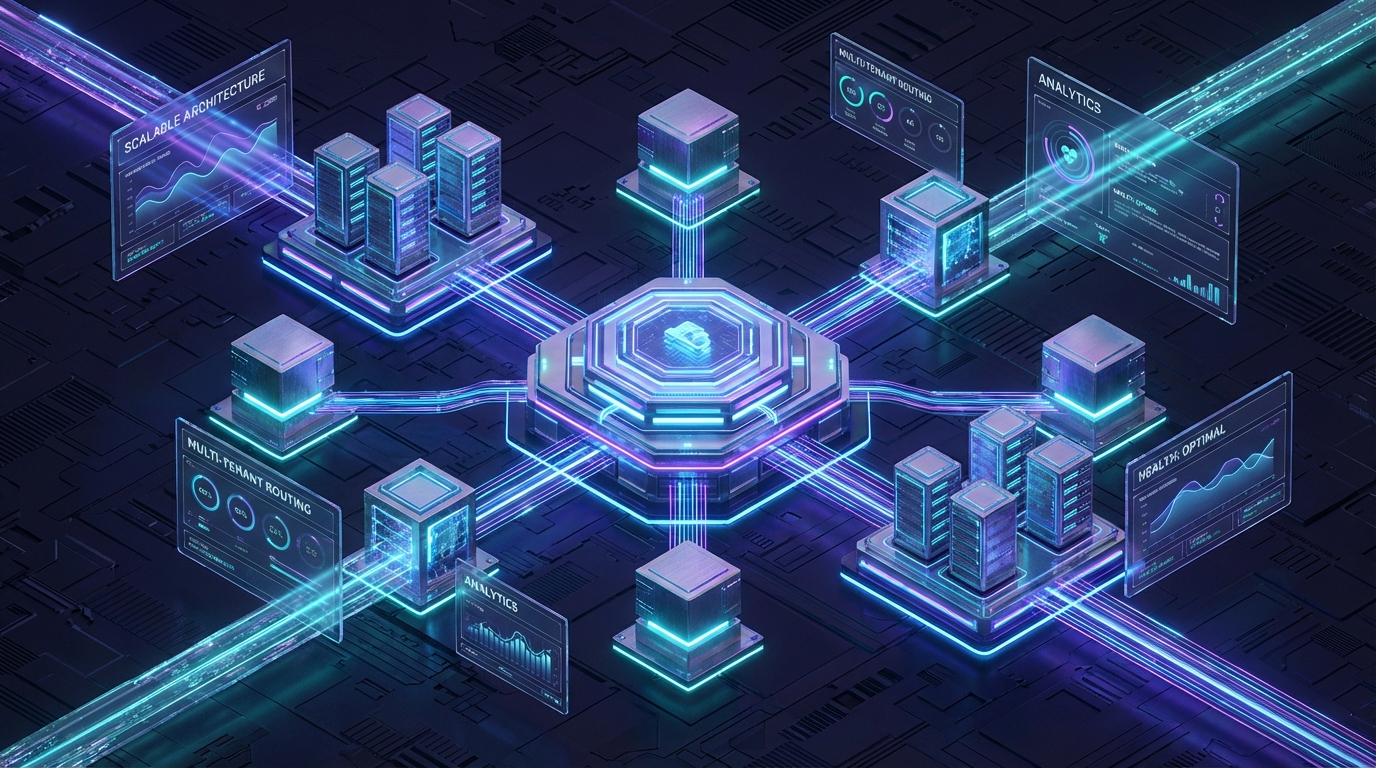
For software-as-a-service (SaaS) founders and growth-focused agency leads, integrating messaging capabilities is no longer just an add-on—it is a core product requirement. However, scaling from a single automated WhatsApp number to managing hundreds of distinct client accounts requires a robust WhatsApp API multi-tenant architecture. Without the right infrastructure, developers quickly run into session disconnects, webhook collisions, and rate-limiting bottlenecks.
Building a multi-tenant system means your application must seamlessly handle multiple isolated WhatsApp sessions, ensuring that Client A's marketing broadcasts never interfere with Client B's transactional support alerts. This requires deep uptime discipline, intelligent queueing, and a reliable REST API gateway.
In this comprehensive guide, we will explore how to architect a scalable, fault-tolerant WhatsApp notification system. Whether you are building an agency white-label platform or a high-volume customer retention tool for SaaS, this framework will help you design an infrastructure built for reliability and scale.
The Challenge of Multi-Client WhatsApp Management
When you transition from a single-user application to a multi-tenant platform, the architectural complexity multiplies. A multi-tenant environment dictates that a single instance of your software serves multiple customers (tenants), but each tenant's data, configurations, and WhatsApp sessions must remain strictly isolated.
Common pitfalls when scaling WhatsApp infrastructure include:
- Session Contamination: Failing to properly sandbox session tokens, leading to cross-client message leaks.
- Webhook Overload: Receiving thousands of inbound messages and delivery receipts simultaneously, overwhelming your server's processing capacity.
- Rate Limit Penalties: Triggering provider bans because one client launched a massive, unthrottled marketing campaign that impacted the shared IP or application layer.
- State Desync: Losing track of which client's WhatsApp session is authenticated, disconnected, or requiring re-authentication.
To solve these issues, engineering teams must move away from tightly coupled scripts and embrace a decoupled, microservices-inspired WhatsApp API multi-tenant architecture.
Core Pillars of a WhatsApp API Multi-Tenant Architecture
A reliable multi-session infrastructure relies on three foundational pillars: session isolation, asynchronous queueing, and dynamic webhook routing. By separating these concerns, you ensure that a failure in one tenant's workflow does not degrade the entire platform.
1. Session Isolation and State Management
At the database level, every WhatsApp session must be uniquely mapped to a specific tenant ID. When a client connects their WhatsApp account to your platform, your system should generate a unique session identifier. This identifier acts as the key for all outbound API requests and inbound webhook payloads.
Best practices for session management include:
- Isolated Credentials: Store session tokens securely and ensure your API requests always pass the correct tenant context.
- Automated Health Checks: Implement background cron jobs that periodically ping the API to verify session status (e.g., connected, disconnected, pending authentication).
- Graceful Reconnection Flows: If a session drops, your UI should automatically prompt the specific tenant to re-authenticate without affecting other active users.
2. Intelligent Message Queueing and Throttling
Directly executing API calls from your application's main thread is a recipe for downtime. In a multi-tenant environment, you must use a message broker (such as Redis, RabbitMQ, or Apache Kafka) to handle outbound messages asynchronously.
Implementing a queueing system allows you to:
- Control Throughput: Throttle outbound messages to respect rate limits, preventing account bans during high-volume campaigns.
- Implement Retries: If a network timeout occurs, the queue worker can automatically retry the message with exponential backoff.
- Tenant Fairness: Use dedicated queues or priority routing to ensure that a massive marketing broadcast from Tenant A does not delay a critical password reset OTP from Tenant B.
3. Dynamic Webhook Dispatching
When users reply to your clients, or when delivery receipts are generated, the WhatsApp API provider will send a webhook payload to your server. A centralized webhook dispatcher is critical for a multi-tenant architecture.
Your dispatcher should:
- Identify the Tenant: Extract the session ID or destination number from the incoming payload to determine which client owns the data.
- Acknowledge Quickly: Return a 200 OK status to the provider immediately to prevent webhook timeouts and retries.
- Process Asynchronously: Push the payload into an inbound queue where background workers can parse the message, update your database, and trigger your client's specific automation logic.
Scaling High-Volume Campaigns for SaaS and Agencies
For growth-marketing platforms and agencies running multi-client workflows, high-volume engagement is the ultimate goal. However, high volume must be balanced with strict operational trust.
Prioritizing Transactional vs. Marketing Traffic
Not all messages are created equal. A customer support platform integrating with WhatsApp must ensure that live agent replies and system alerts (transactional) are delivered instantly, even if a marketing campaign is actively sending thousands of promotional messages.
To achieve this, configure your architecture to utilize multiple priority queues. Assign high-priority flags to support replies and low-priority flags to bulk marketing broadcasts. Your queue workers should always drain the high-priority queue before processing the bulk queue, ensuring latency remains low for critical customer communications.
Designing for Redundancy and Uptime Discipline
Reliability is the most critical feature of any communication infrastructure. Your clients depend on your platform to maintain their customer relationships. To build operational trust, your architecture must include redundancy.
Deploy your queue workers and webhook receivers across multiple availability zones. Implement comprehensive observability using tools like Prometheus or Grafana to monitor API latency, queue depth, and webhook processing times. By tracking these metrics per tenant, you can proactively identify if a specific client is experiencing delivery issues before they even submit a support ticket.
Why WasenderApi Fits Multi-Tenant SaaS Workflows
Building the underlying messaging infrastructure from scratch is highly resource-intensive. Technical founders and lead software engineers choose WasenderApi because it abstracts the complexity of raw connection management while providing the architectural flexibility needed for multi-tenant scalability.
WasenderApi is designed as a reliable REST API service for developers. Instead of managing complex socket connections and encryption layers on your own servers, your application simply communicates with WasenderApi via standardized HTTP requests. This allows your engineering team to focus on building your core SaaS product—whether that is an AI-driven support inbox, a high-volume retention marketing tool, or an agency campaign manager.
By acting as your scalable gateway, WasenderApi handles the heavy lifting of session persistence and message delivery. For complete implementation details, endpoint structures, and webhook payload formats, developers should consult the official API documentation.
Implementation Framework: From Concept to Production
Ready to build your multi-tenant infrastructure? Follow this structured implementation path:
- Database Schema Design: Create relational tables linking `Tenants`, `WhatsApp_Sessions`, and `Message_Logs`. Ensure every outbound message and inbound webhook is tied to a specific session ID.
- API Gateway Integration: Connect your backend to WasenderApi. Build modular service classes in your application to handle authentication, message sending, and media uploading.
- Queue Configuration: Set up a Redis or RabbitMQ instance. Create separate queues for high_priority_outbound, bulk_outbound, and inbound_webhooks.
- Webhook Endpoint Security: Create a single, highly available endpoint to receive webhooks. Implement signature validation to ensure payloads are authentically originating from your API provider.
- Testing and Observability: Simulate high-load environments. Test how your system handles a sudden influx of 10,000 messages and ensure your queue workers scale horizontally to handle the load.
Conclusion
Designing a robust WhatsApp API multi-tenant architecture is the defining factor between a fragile script and an enterprise-grade SaaS platform. By prioritizing session isolation, intelligent asynchronous queueing, and reliable webhook routing, you can build a system capable of handling massive scale without sacrificing deliverability or uptime. Partnering with a developer-focused infrastructure provider like WasenderApi empowers your team to deploy highly reliable communication tools that drive retention, growth, and trust for your clients.
Frequently Asked Questions
What is a WhatsApp API multi-tenant architecture?
A multi-tenant architecture is a software design where a single instance of an application serves multiple clients (tenants). In the context of the WhatsApp API, it means securely managing multiple distinct WhatsApp sessions, message queues, and webhooks within one centralized platform without data overlap.
How do I prevent rate limits when managing multiple clients?
To prevent rate limits, you must implement an asynchronous message broker (like Redis or RabbitMQ). This allows you to throttle outbound messages per tenant, ensuring that high-volume marketing campaigns are queued and sent at a safe, controlled pace rather than all at once.
How should a SaaS platform handle inbound WhatsApp webhooks?
A SaaS platform should use a centralized webhook dispatcher that immediately acknowledges the receipt (returning a 200 OK status) and then pushes the payload into an internal queue. Background workers can then safely parse the payload, identify the corresponding tenant via the session ID, and execute the required application logic.
Why is session isolation important for marketing agencies?
Session isolation ensures that each client's WhatsApp data, contact lists, and messaging activity are strictly separated. This prevents cross-client data leaks, ensures accurate analytics, and guarantees that if one client's session disconnects, the rest of the agency's clients remain unaffected.
Related Posts
n8n + WaSenderAPI: Master WhatsApp Automation Without Code (2025 Guide)
Discover the most affordable WhatsApp automation solution only $6/month with WaSenderAPI combined with no-code n8n workflows. Build perfect, custom WhatsApp automations quickly and easily without coding. Follow our step-by-step guide to save costs while creating powerful, scalable, and secure WhatsApp messaging for your business.
Create a Free WhatsApp AI Chat Bot with Python and Gemini (Full Guide)
Learn how to create a free WhatsApp AI chatbot using Python, Google’s Gemini API, and WaSenderAPI. This step-by-step guide helps you build and deploy an intelligent WhatsApp assistant at minimal cost no need for WhatsApp Business API.

WhatsApp API Rate Limits Explained: How to Scale Messaging Safely in 2025
Struggling with WhatsApp messaging restrictions? Learn how Meta's tier system works, how to upgrade your daily limits, and how to scale your broadcasts safely without getting banned.