
How to Architect a Fault-Tolerant WhatsApp API Infrastructure for Customer Support Platforms
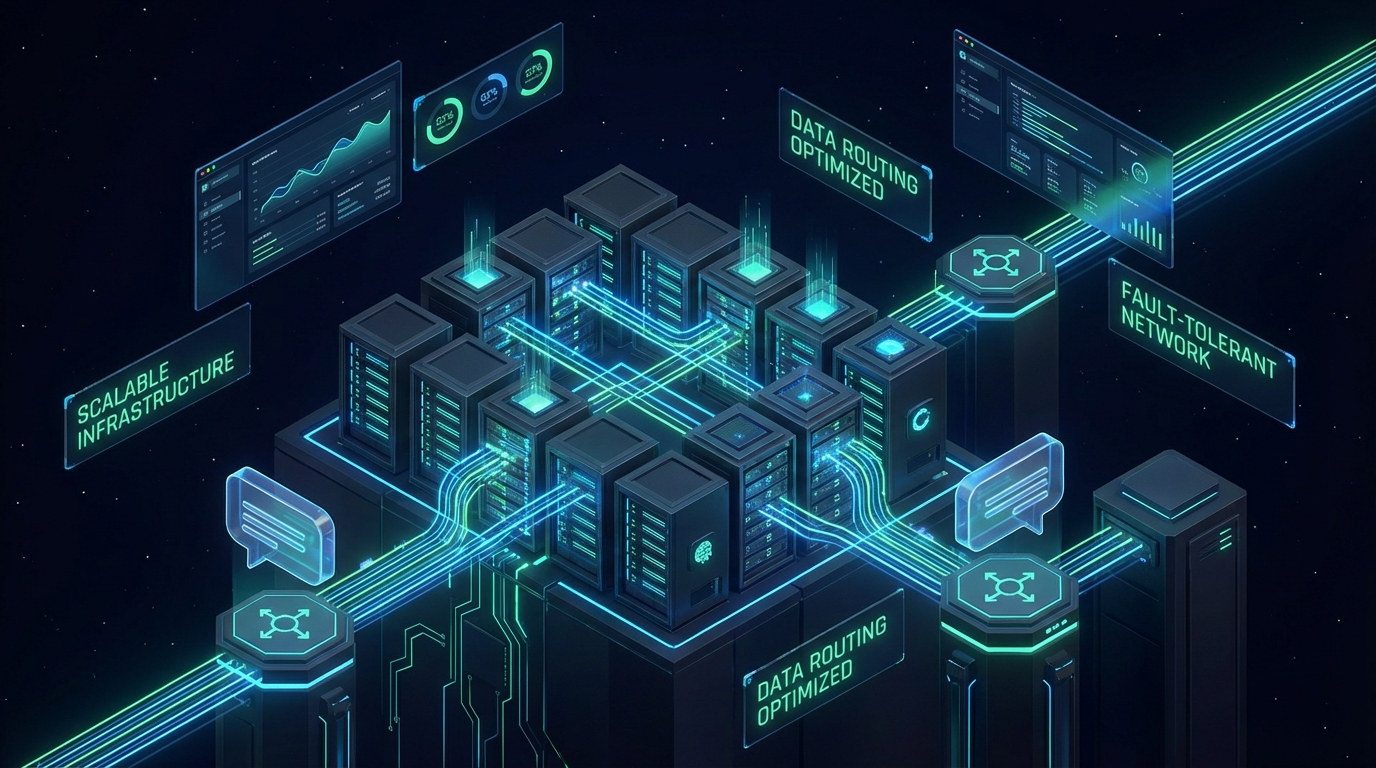
For growing SaaS companies and small businesses, transitioning customer support to WhatsApp is a proven strategy for increasing engagement and customer retention. However, building a reliable WhatsApp API infrastructure for customer support requires more than just connecting a basic webhook. When message volumes spike during product launches, service outages, or marketing campaigns, a poorly designed architecture will drop messages, duplicate responses, and ultimately damage operational trust.
Technical founders and lead software engineers face a distinct challenge: designing a communication layer that guarantees message deliverability while managing concurrent sessions across multiple support agents. To achieve this, engineering teams must move beyond simple synchronous scripts and embrace event-driven, fault-tolerant architectural patterns.
This comprehensive guide explores the structural decisions required to build a resilient, high-volume WhatsApp customer communication infrastructure. By focusing on decoupled processing, robust queuing, and strict observability, developers can build a system that scales effortlessly.
The Strategic Importance of Reliable WhatsApp Infrastructure
In modern customer retention strategies, speed and reliability are paramount. Customers reaching out via WhatsApp expect near-instantaneous responses. If your underlying infrastructure drops a webhook payload due to a server timeout, that customer inquiry is lost forever. This directly impacts user trust and increases churn.
Building a resilient WhatsApp API infrastructure for customer support ensures that your business can handle high-throughput messaging without degrading performance. A robust architecture allows your system to gracefully handle API rate limits, network latency, and unexpected traffic surges.
Furthermore, connecting technical execution to business outcomes is critical. A reliable messaging gateway ensures that automated triage logic, AI-driven routing, and human-in-the-loop workflows operate seamlessly. When the underlying infrastructure is rock-solid, growth-marketing and customer-success teams can confidently scale high-volume WhatsApp engagement campaigns.
Architectural Framework for Fault-Tolerant WhatsApp Integration
To prevent data loss and ensure seamless multi-session management, developers should implement a decoupled, event-driven architecture. The following framework outlines the critical components required for a production-ready WhatsApp support platform.
1. Decoupled Webhook Ingestion
The most common mistake in early-stage WhatsApp integrations is processing message logic synchronously within the webhook endpoint. If your server takes too long to query a database or generate an AI response, the WhatsApp provider may assume the request failed and attempt a retry, leading to duplicated messages and degraded performance.
Instead, your webhook ingestion layer should do only two things: accept the incoming payload and immediately acknowledge receipt with a successful HTTP status code. The actual processing of the message should be offloaded to a separate internal service. This ensures your webhook endpoints remain highly responsive, regardless of backend load.
2. Asynchronous Message Queuing
Once the webhook acknowledges the payload, the data must be securely stored in an asynchronous message queue. Implementing a robust queuing system—such as Redis, RabbitMQ, or Apache Kafka—acts as a critical buffer between your ingestion layer and your processing workers.
Queues protect your database and third-party APIs from being overwhelmed during traffic spikes. If your support platform experiences a sudden influx of concurrent user sessions, the queue holds the messages safely until your worker services have the capacity to process them. This is the backbone of any reliable customer-communication infrastructure.
3. Idempotency and Deduplication Logic
In distributed systems, network instability can cause webhook providers to deliver the same message payload multiple times. Your WhatsApp API infrastructure for customer support must be designed to handle these duplicate events gracefully through idempotency.
Every incoming WhatsApp message contains a unique identifier. By storing these IDs in a fast-access cache layer upon receipt, your system can quickly check if a message has already been processed. If a duplicate is detected, the system safely ignores it, preventing your support agents from receiving redundant tickets and ensuring automated workflows are not triggered twice.
Managing Multi-Session Routing for Support Agents
A major challenge for growth-focused agencies and SaaS platforms is routing a single WhatsApp business number to multiple human agents or AI bots. Multi-session WhatsApp management requires sophisticated state tracking to ensure context is maintained across interactions.
- Session State Management: Use a fast, in-memory data store to track the status of every active user conversation. This ensures that when a user replies, the system instantly knows which support agent or automated workflow should handle the message.
- Intelligent Routing: Implement middleware that categorizes incoming messages based on intent, user tier, or language, routing them to the appropriate queue or agent dashboard.
- Concurrency Control: Ensure that your database transactions use optimistic locking or similar mechanisms to prevent two support agents from accidentally claiming and replying to the same customer ticket simultaneously.
Designing for High Availability and Operational Trust
Operational trust is built on uptime discipline and redundancy. To prevent downtime and ensure zero-drop deliverability, your architecture must include robust error handling and comprehensive observability.
Retry Mechanisms and Dead Letter Queues (DLQ)
When sending outbound messages via the WhatsApp API, temporary network failures or rate limits can cause requests to fail. Implementing an exponential backoff retry strategy allows your system to automatically re-attempt failed deliveries without overwhelming the API provider.
If a message continually fails to send after maximum retries, it should be routed to a Dead Letter Queue (DLQ). A DLQ isolates problematic messages, allowing your engineering team to investigate the root cause—such as an invalid phone number or a blocked account—without stalling the rest of the outbound message queue.
Observability, Logging, and Alerting
You cannot scale what you cannot measure. A production-grade customer support infrastructure requires deep observability into both webhook ingestion and outbound API performance. Developers must log the lifecycle of every message, tracking latency, queue depth, and delivery success rates.
Set up automated alerts for critical thresholds. If the message queue depth exceeds a safe limit, or if the webhook ingestion error rate spikes, your engineering team should be notified immediately. Proactive monitoring is the key to maintaining the high reliability required for enterprise-grade customer retention strategies.
Connecting Technical Execution to Marketing Outcomes
While infrastructure design is highly technical, its ultimate goal is to drive business growth. A well-architected WhatsApp support system directly influences customer satisfaction. When messages are delivered reliably, support tickets are resolved faster, leading to higher customer retention rates.
Furthermore, a scalable architecture allows marketing teams to deploy high-volume engagement campaigns without fear of crashing the support desk. When automation logic, session management, and deliverability are technically sound, the business can confidently use WhatsApp as a primary channel for both growth-marketing and long-term customer success.
Why Developers Choose WasenderApi for Support Infrastructure
Building the internal queuing and routing logic is complex enough without having to manage the underlying intricacies of WhatsApp protocol connections. WasenderApi provides a reliable, scalable REST API gateway that abstracts these complexities, allowing developers to focus entirely on building their platform's core logic.
With a focus on uptime discipline and developer-friendly integration, WasenderApi is designed to serve as the dependable communication layer for your SaaS or agency operations. By handling the heavy lifting of persistent WhatsApp connections, it empowers engineering teams to build robust multi-session architectures with confidence. For comprehensive details on endpoints, rate handling, and webhook configuration, developers can review the official API documentation.
Frequently Asked Questions (FAQ)
Why is synchronous webhook processing bad for WhatsApp API integrations?
What is a Dead Letter Queue (DLQ) in WhatsApp infrastructure?
How do I prevent support agents from replying to the same WhatsApp message?
How does idempotency protect a WhatsApp customer support platform?
Can WasenderApi handle multi-session WhatsApp management for agencies?
Related Posts
n8n + WaSenderAPI: Master WhatsApp Automation Without Code (2025 Guide)
Discover the most affordable WhatsApp automation solution only $6/month with WaSenderAPI combined with no-code n8n workflows. Build perfect, custom WhatsApp automations quickly and easily without coding. Follow our step-by-step guide to save costs while creating powerful, scalable, and secure WhatsApp messaging for your business.
Create a Free WhatsApp AI Chat Bot with Python and Gemini (Full Guide)
Learn how to create a free WhatsApp AI chatbot using Python, Google’s Gemini API, and WaSenderAPI. This step-by-step guide helps you build and deploy an intelligent WhatsApp assistant at minimal cost no need for WhatsApp Business API.

WhatsApp API Rate Limits Explained: How to Scale Messaging Safely in 2025
Struggling with WhatsApp messaging restrictions? Learn how Meta's tier system works, how to upgrade your daily limits, and how to scale your broadcasts safely without getting banned.